Elmira, New York – Find the history of your hometown, family, and Friends
Elmira New York United States
History Elmira New York United States, From Newtown to Today
Elmira sits in New York’s Southern Tier, just north of the Pennsylvania line, and the city’s story has always been tied to the Chemung River and its floodplain. If you’ve ever wondered why this small city shows up so often in regional history, the answer is simple, people and goods kept moving through here, and events kept colliding here.
This plain-English guide to the history Elmira New York United States follows a clear timeline, from Haudenosaunee homelands and Revolutionary War fighting near Newtown, to early settlement at the meeting point of Newtown Creek and the Chemung River. Along the way, you’ll see why the place first known as Newtown took on the name Elmira in the early 1800s, and why the naming still comes with competing stories (we’ll separate what’s documented from what’s local tradition).
Next comes the transportation boom that shaped everything, with canals like the Chemung Canal and later rail lines that turned Elmira into a Southern Tier crossroads linking bigger New York markets. From there, the narrative moves into the Civil War era, including Elmira’s role as a muster and training area, and the prisoner-of-war camp that left a lasting mark.
Finally, we’ll track the rise and decline of manufacturing, the impact of major floods (especially the 1972 disaster and redevelopment that followed), and what Elmira looks like today.
Before Elmira was Elmira: Native nations, war, and early settlements
Before maps showed “Elmira,” this stretch of the Southern Tier was already a lived-in place with deep roots. The Chemung River valley shaped where people traveled, traded, and built community long before European-American settlement took hold. To understand the history elmira new york united states, it helps to start with the first communities here, and the turning points that changed everything fast.
Haudenosaunee roots in the Chemung River valley
Long before Newtown Creek met the Chemung River on anyone’s survey, the region was home to Haudenosaunee peoples, including the Cayuga (Gayogo̱hó꞉nǫʼ). In this part of New York, the river valley acted like a natural road. It offered water, fish, fertile soils, and a clear route through wooded hills. In other words, it was both pantry and pathway.
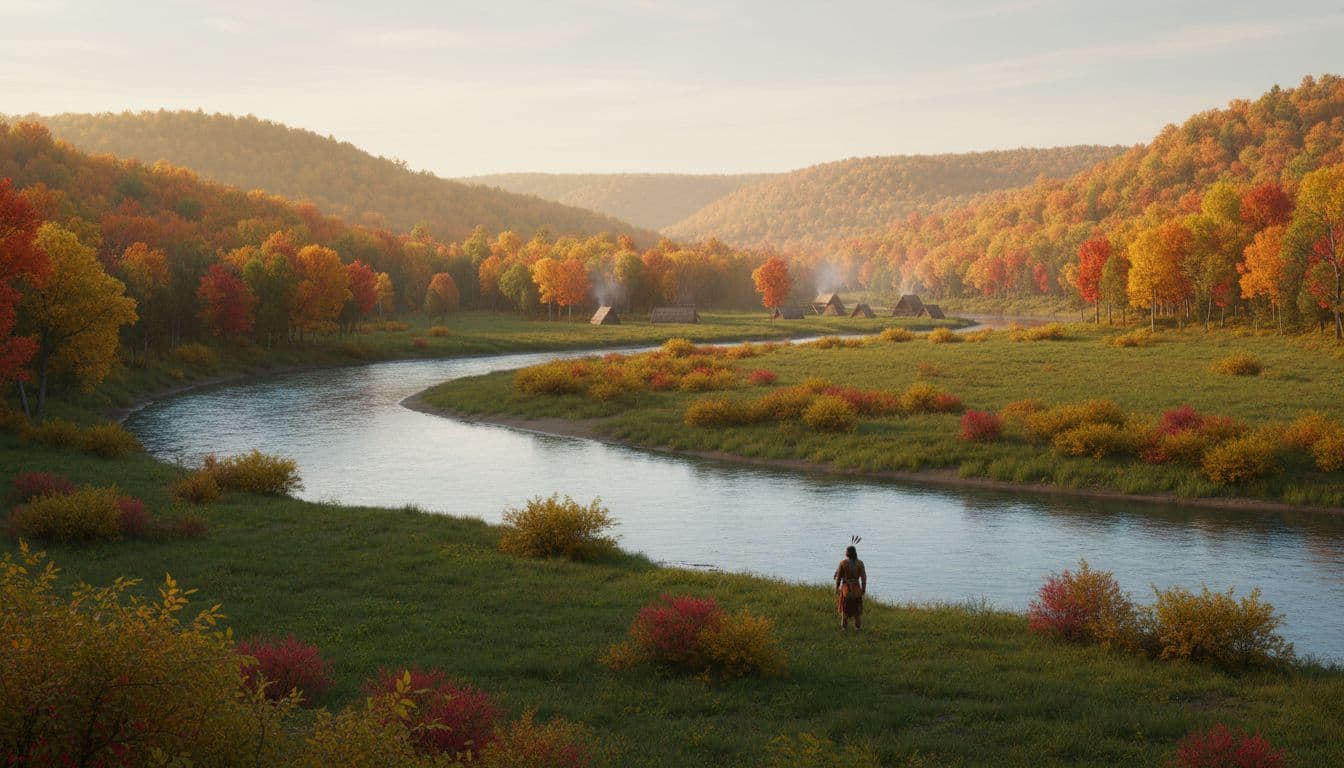
Because the valley connected communities to larger networks, it mattered for travel and exchange. Contact with Europeans often centered on trade, especially furs and other goods that moved along waterways. These relationships could be practical and businesslike, but they also brought pressure, disease, and shifting alliances. Over time, the balance of power tilted as colonial settlement expanded.
A simple way to picture it is this: the Chemung valley was a well-used corridor long before it became a county seat and rail hub. Even the earliest “town” logic of Elmira, build where routes meet, started with Indigenous geography.
For a local overview that connects Indigenous settlement and early place names, see the Elmira area history write-up from the Elmira Star-Gazette’s Twin Tiers Roots series.
Takeaway: Elmira’s earliest story is not about a city at all. It’s about a river valley that made daily life, trade, and movement possible.
The Battle of Newtown and the reshaping of the region
During the Revolutionary War, the Continental Army launched the 1779 Sullivan Expedition to break the power of Haudenosaunee nations aligned with the British and to reduce frontier attacks. That larger campaign reached the Chemung Valley in a direct way at the Battle of Newtown, fought south of today’s Elmira.
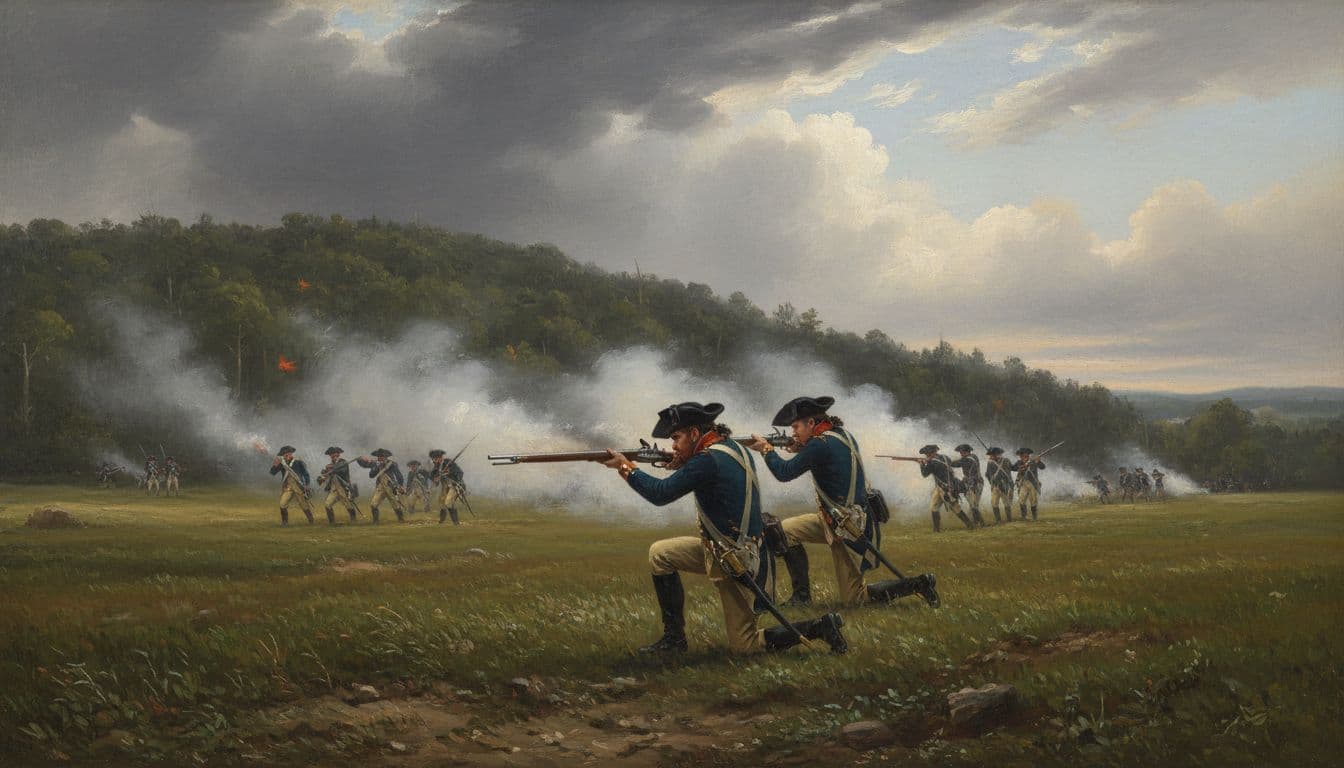
The local outcome was a major American victory, and it changed the region’s future. After the fighting, the campaign’s wider pattern of destroying villages, crops, and food stores undercut the ability of many Haudenosaunee families to remain on their lands. As a result, displacement increased, and later settlement pressures only grew.
In practical terms, the battle helped open the door for more European-American movement into the valley. Once the war ended, the push to “settle” land turned into paperwork as well as plows. In 1791, leaders from the Haudenosaunee and the United States signed a treaty in the Elmira area meant to address land disputes after the war. Still, treaties did not stop land loss. Under sustained pressure, many Cayuga eventually moved north with other Haudenosaunee people to Canada, where the British Crown provided land for resettlement.
For a quick battle summary and context, the American Battlefield Trust’s Battle of Newtown page lays out why this was the key clash of the campaign.
From Newtown to a growing village at the river crossroads
After the Revolution, permanent European-American settlement started to take shape around the same geographic truth the Haudenosaunee had always known: the confluence mattered. In 1788, New York created Chemung Township (the foundation of today’s Chemung County). Not long after, a settlement took hold at the meeting point of Newtown Creek and the Chemung River, the spot that would anchor the area’s growth.
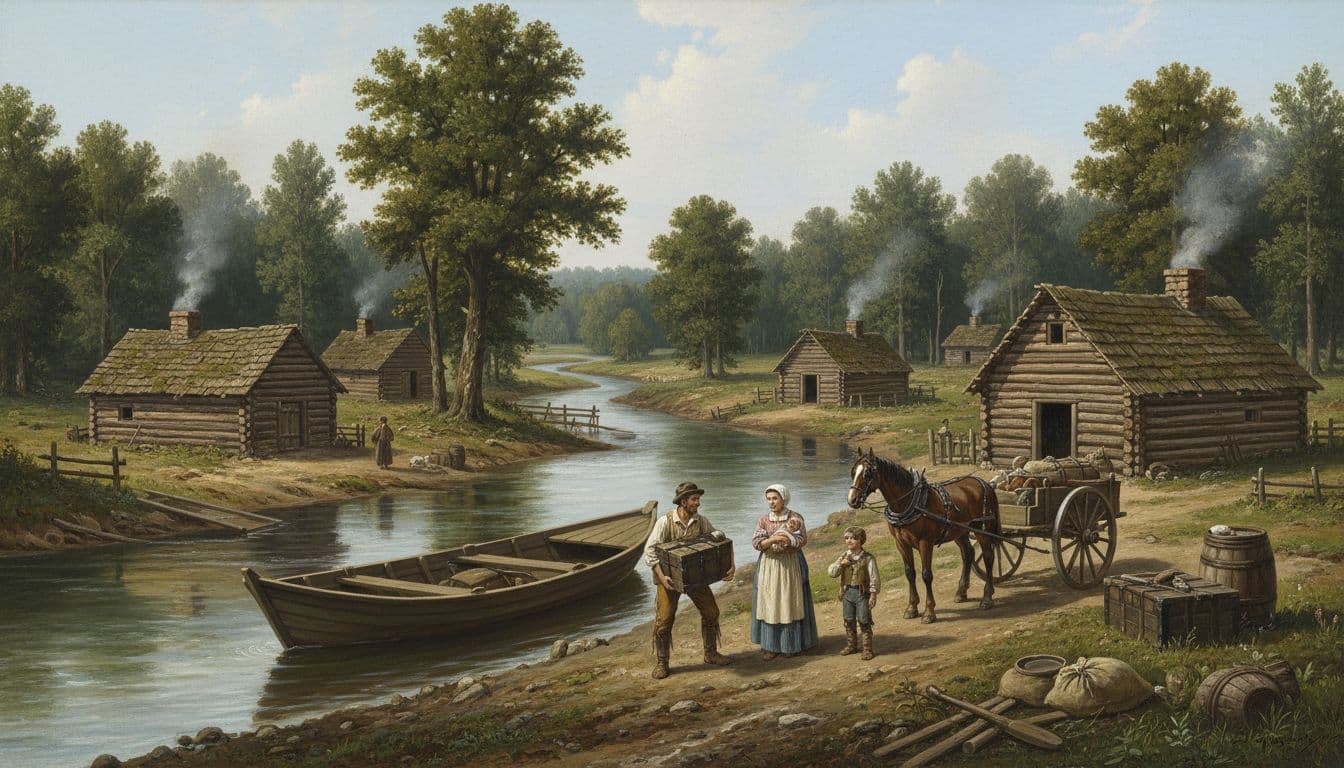
The early community wasn’t one neat, planned place. Separate hamlets formed nearby, then began to function like one shared town. In 1792, Newtown joined with Wisnerburg and DeWittsburg to create the village of Newtown. That merger tells you a lot: people were clustering where travel and trade were easiest, and they wanted shared services and clearer local government.
One early name that still echoes is Abraham Miller, a former Continental Army captain often cited as the first European-American settler in the Elmira area. Local place names, like Miller’s Pond and Miller Street, still point back to that first wave of post-war arrivals.
For a concise timeline of these early milestones (Chemung Township, Newtown’s growth, and the later name change), see this Elmira history overview.
How Elmira got its name, and why the answer is not simple
Elmira’s name looks tidy on a map, but the backstory is anything but. In the early 1800s, towns often renamed themselves for practical reasons, like avoiding confusion with other places, or for social reasons, like honoring someone with influence. Records capture the moment a new name took hold, yet they do not always capture the full “why.”
That’s why the history elmira new york united states includes a rare mix of documented decisions and hometown storytelling. If you want one clean origin, Elmira won’t give it to you. What it does give you is a snapshot of how local government, memory, and pride can collide.
The 1808 name change at Teal’s Tavern
The key fact is solid: in 1808, local leaders made the naming decision at a town meeting held at Teal’s Tavern, and Newtown became Elmira. That part shows up consistently in later summaries and histories, including Elmira’s overview entry.
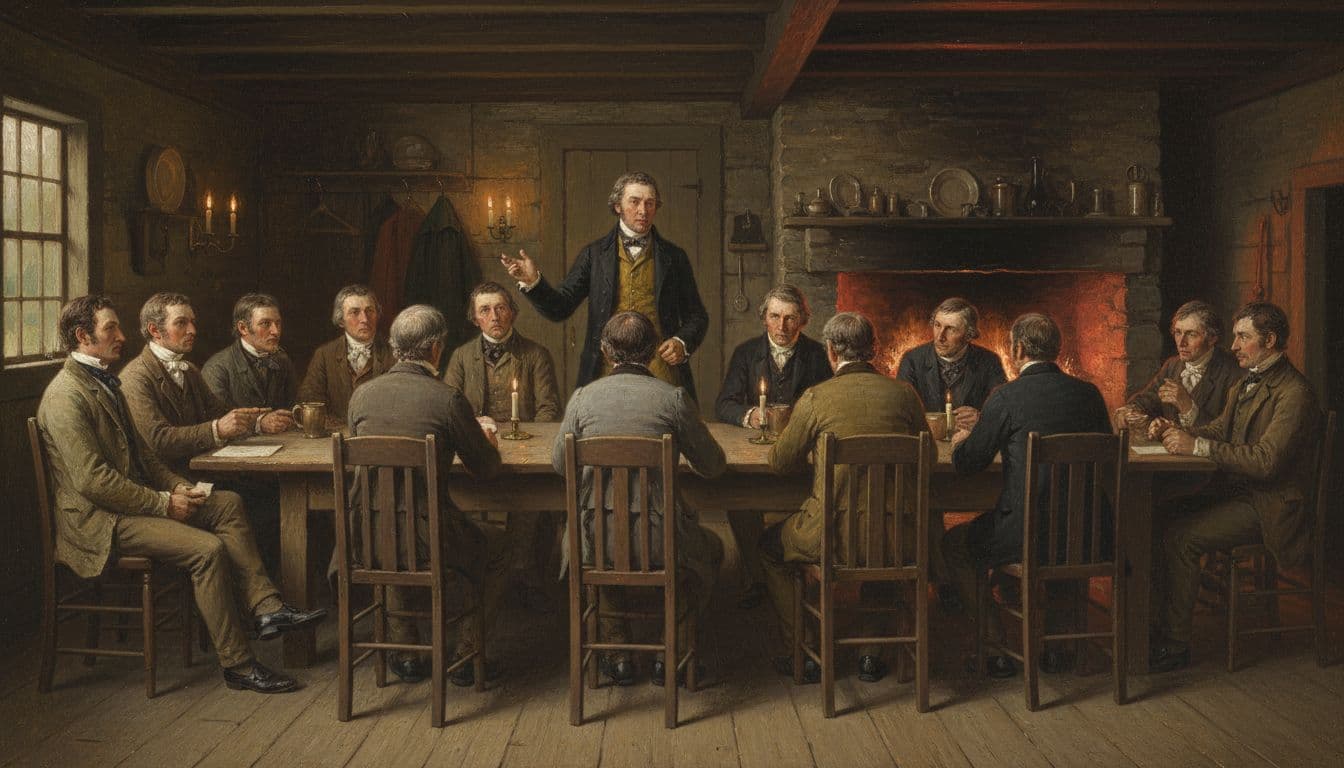
It also helps to remember what a tavern meant back then. It was not just a place to eat or drink. In small towns, taverns worked like a community living room and a public office rolled into one. People posted notices, argued politics, swapped news, and held meetings where votes happened in the open.
So when you hear “Teal’s Tavern,” picture a civic space. It was closer to today’s town hall than a modern bar. That setting also explains why later generations remembered the place so clearly, even when they disagreed on the reason for the name.
The leading origin stories, and what sources disagree about
Once you move past the 1808 meeting, the trail gets fuzzy. The best-known explanations fall into three main versions, and none is fully “case closed.”
- The Teal’s daughter story (popular, unproven): Local tradition says the town took the name from tavern owner Nathan Teal’s young daughter, often identified as Elmira. This version gets repeated often, but sources also admit it has never been confirmed. A readable example of how the story circulates is the Star-Gazette piece, “Elmira Teall, city namesake, a mystery woman”.
- The “admired woman” version tied to Matthew Carpenter (later retellings): Another account says an influential figure, often described as Matthew Carpenter, pushed for the name Elmira in honor of a woman he respected. It’s a classic 19th-century naming pattern, but it surfaces mainly through later histories, not firsthand meeting notes.
- The 1821 convention and “Carpenter’s daughter” claim (family-history angle): A later family history book (published in the late 1800s) argues the name connects to Carpenter’s daughter and places the naming at an 1821 convention. That timing clashes with the well-known 1808 meeting, which is why historians treat it cautiously.
Bottom line: the date and place of the decision are clearer than the person behind the name.
This messiness is normal. Early towns kept uneven records, spelling varied, and stories traveled by word of mouth long before they hit print.
Incorporation and the “Queen City” identity
Even with a debated name origin, Elmira’s identity hardened over time. In 1864, Elmira incorporated as a city, formed from parts of the town and the village. The Town of Elmira still surrounds the city on several sides, which is why their timelines stay tightly braided. You can see this “shared history” idea reflected in standard references like Britannica’s Elmira summary.
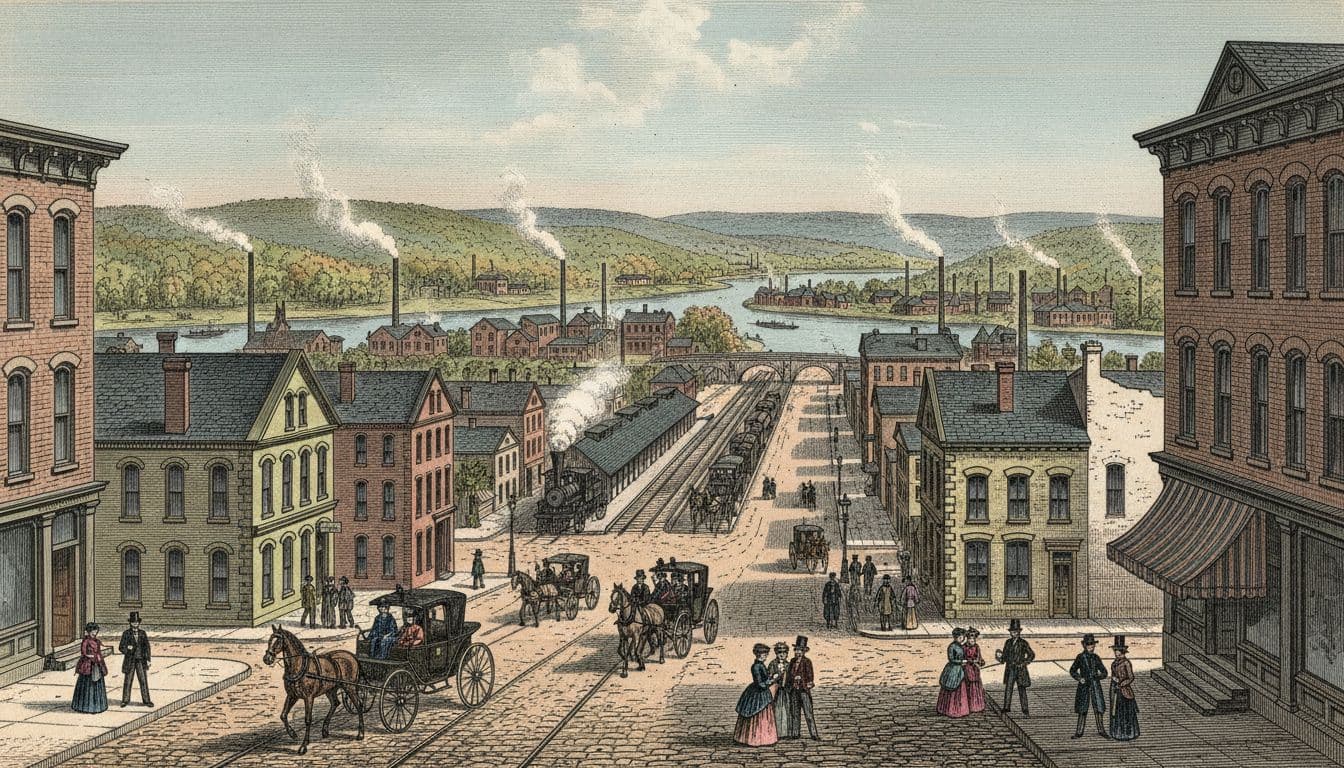
The nickname “Queen City” fits that era of growth. Elmira became a Southern Tier connector through canals and railroads, and civic pride followed the money and movement. In a way, the name story matches the city story: not one straight line, but many threads pulled tight over time.
Canals and railroads turned Elmira into a Southern Tier transportation hub
Elmira did not grow into a regional center by accident. It grew because it sat where routes could meet, swap cargo, and keep moving. First, canals gave the city a waterborne connection into New York’s bigger trade network. Then railroads arrived and made that same network faster, more reliable, and open year-round.
If you want the short version of the history elmira new york united states transportation story, it’s this: a terminus town collects jobs, warehouses, and traffic, because every shipment has to stop, be counted, and be handed off.
The Chemung Canal era, and the trade it unlocked
A canal is basically an engineered shortcut for commerce, a controlled water path where boats can haul heavy loads cheaply. When the Chemung Canal was completed in 1833, Elmira mattered more overnight because it sat at the southern end of the line. Being a terminus is like being the last big truck stop before the highway ends. Cargo piles up there, and so do the businesses that handle it.
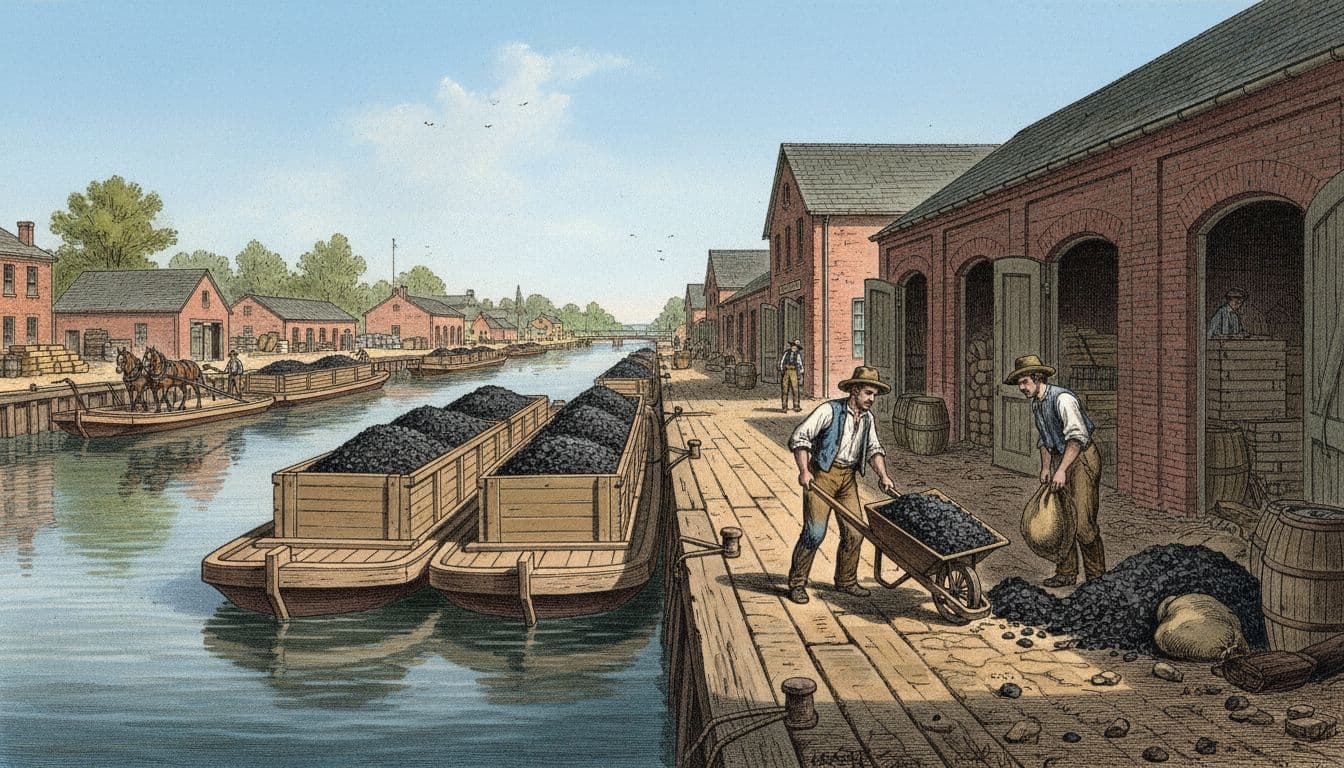
From Elmira, canal traffic could reach broader canal routes, and from there the state’s major markets. That meant local mills, farms, and shops were no longer limited to what a wagon could move over rough roads. In the other direction, Elmira could bring in supplies that were hard to source locally.
A few categories of goods explain the canal’s impact in plain terms:
- Coal: A huge driver, especially once the Junction Canal connected Elmira to Corning, helping move coal sourced from Pennsylvania’s mining regions through the Northern Susquehanna canal system.
- Lumber and farm products: Easier shipment helped local producers sell beyond the immediate valley.
- General merchandise: Store goods arrived more consistently and in larger quantities.
For a simple, local timeline of how the canal worked and where it ran, see Chemung History’s Chemung Canal overview.
Key idea: The canal did not just move boats. It moved risk and cost downward, so more trade suddenly made sense.
Railroads arrive, and Elmira becomes a crossroads city
Canals were powerful, but they had limits. They froze in winter, slowed in low water, and required a lot of handling at locks and docks. Railroads changed the pace. In 1849, the New York and Erie Railroad ran through Elmira, putting the city on a major New York City to Buffalo route. That single connection pushed Elmira from a canal endpoint to a place where people could plan trips, shipments, and schedules with less guesswork.
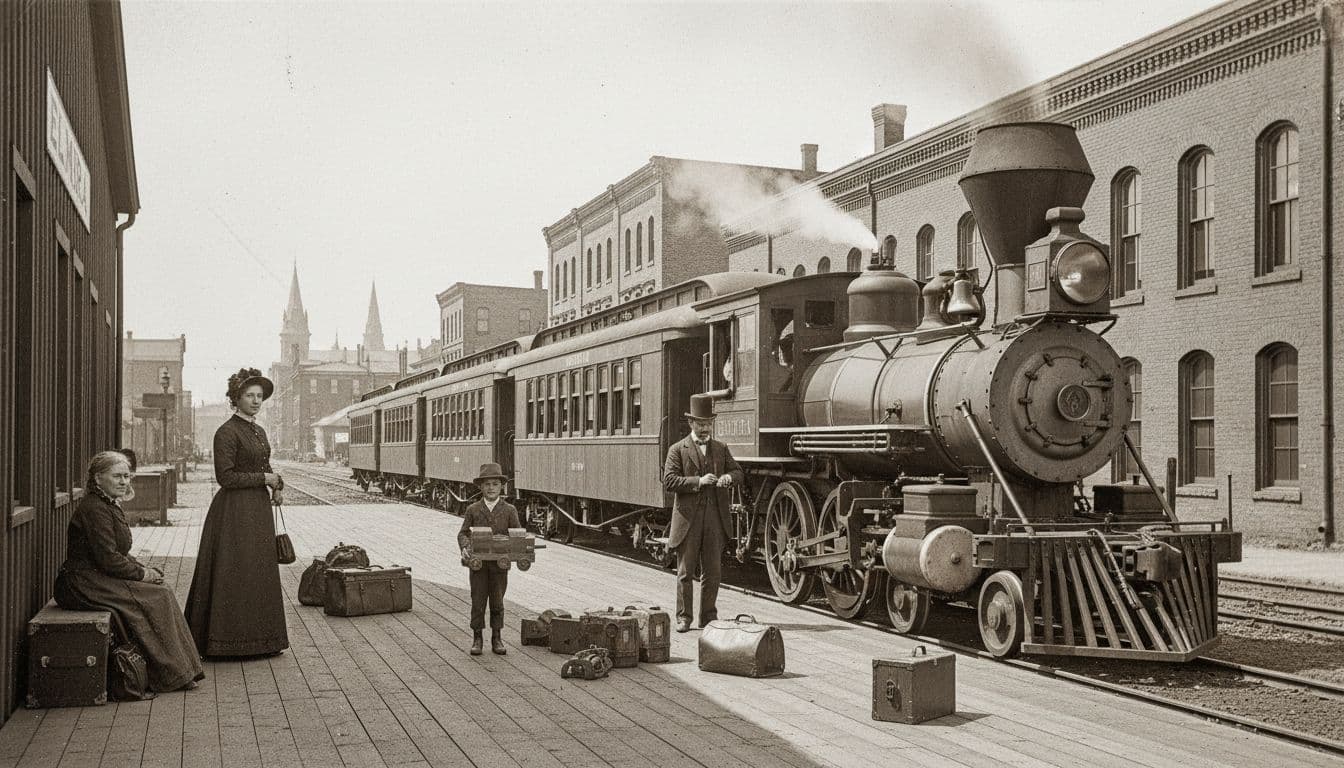
Then the city gained spokes in multiple directions. The Elmira and Jefferson Railroad (1850) created a route north. The Elmira and Williamsport Railroad (1854) added a route south. Put those together and Elmira starts to look like a switchboard. Freight could arrive from one direction, get sorted, then leave on another line without long overland detours.
Later efforts kept stacking onto that advantage. Work began in 1872 on the Utica, Ithaca and Elmira Railroad, eventually linking communities along the way to Cortland and Syracuse. In 1884, the Delaware, Lackawanna and Western Railroad completed a competing route, adding even more capacity and options.
This is what rail did better than canals alone:
- Speed: Shorter travel times meant fresher goods and tighter business cycles.
- Reliability: Service continued when canals could not, especially in winter.
- Scale: More frequent trains helped factories and wholesalers plan bigger runs.
For a quick set of dated milestones on the first Erie service and the web of local rail lines, check Chemung History’s railroad facts page.
Why transportation mattered during the Civil War period
When war came, transportation turned from a business advantage into a logistics advantage. A well-connected rail town could bring people in, organize them, and move them out again with less delay. That is why sources point to Elmira’s suitability as an early training and mustering location, especially given its multiple rail connections and established freight handling.
Rail access also meant supplies could travel with fewer transfers. Food, uniforms, tools, medical goods, and equipment all follow the same basic rule: the fewer times you unload and reload, the fewer mistakes you make, and the faster you recover from shortages.
In other words, Elmira’s canals and railroads had already built the infrastructure a wartime system needs:
- Staging space (yards, sidings, warehouses, depots)
- Skilled labor (handlers, mechanics, clerks, teamsters)
- Regional reach (routes that ran north, south, and across the state)
For a primary-source rooted overview of how Chemung County fit into New York’s wartime organization and why railway facilities mattered, see the New York State Military Museum’s Chemung County Civil War entry.
Big turning points: the Civil War camp, industry, floods, and reinvention
Elmira’s history has a few moments that still shape how the city feels today. Some are painful, some are hopeful, and most are complicated. If you’re trying to understand the history Elmira New York United States in a practical way, it helps to focus on four big shifts: a Civil War prison camp, the rise of industry and civic institutions, a long economic slide, and a flood that forced hard choices about downtown.
Elmira Prison and what it reveals about the war on the home front
In 1864, Elmira’s existing Union training site, Camp Rathbun, became a prisoner-of-war camp for captured Confederate soldiers. The prison operated from 1864 to 1865, and people on both sides remembered it for suffering. Prisoners gave it the grim nickname “Hellmira.” (The name shows up often in public talks and history writing, including a SUNY event notice focused on the camp’s legacy, “Hellmira” program overview.)
The basic numbers tell you why the camp became so infamous:
- About 12,123 Confederate soldiers were held there.
- About 2,963 died while imprisoned.
The deaths were tied to harsh, familiar threats of 19th-century camps: malnutrition, exposure, disease, and weak medical care. Elmira’s winter weather made those conditions worse. In other words, the war didn’t stay “over there” on battlefields. It showed up behind fences, and it showed up in local responsibilities like housing, food supply, sanitation, and burial.
At a high level, the camp sat near the Chemung River and low, wet areas that included ponds. That setting mattered because stagnant water and overcrowding are a bad mix, especially in a makeshift prison.
The camp’s story is a reminder that home-front places can carry war scars for generations, even if no major battle happened downtown.
For readers who want a deeper dive into documented captivity experiences across Civil War prisons, this newer academic work offers broader context, Civil War POW camp study (PDF).
Education and civic life, including Elmira College’s national firsts
While the prison camp is one of Elmira’s darkest chapters, the city also built institutions that signaled ambition and stability. A major example is Elmira College, founded in 1855 (first chartered as Elmira Female College). At a time when higher education for women often meant limited coursework, Elmira helped push the idea that women deserved serious, degree-level study.
That mattered for city development in plain terms. A college attracts faculty, staff, and students. It also pulls in lectures, libraries, visiting speakers, and cultural events. Over time, those things build a stronger civic identity, not just a bigger economy.
If you want to browse primary materials and archival items connected to Elmira College’s history, Elmira College historical collections is a useful starting point.
Factories, jobs, and why the city’s population later fell
Elmira’s growth in the late 1800s and early 1900s followed a pattern you see across the Southern Tier: transportation access helped factories thrive, and factories helped the city grow. Rail connections and skilled trades supported everything from textiles to metalwork, creating steady jobs and reinforcing Elmira’s role as a regional hub.
By 1950, Elmira’s population peaked at around 50,000. After that, the story changed. As railroading and manufacturing shrank nationwide, Elmira lost some of the same job anchors that once made it boom. In the early 1970s, multiple large employers closed plants or moved operations away, and that ripple hit local paychecks, storefronts, and housing demand.
Today, the city’s population sits closer to the mid-20,000s, roughly 26,255 in recent estimates. The decline is not just about job losses downtown. It also reflects a long suburban shift as families moved outward, often following newer housing and highway-oriented shopping.
A local example of how major employers once shaped daily life is the story of the region’s knitting industry, covered by the Chemung County Historical Society in Working at the Elmira Knitting Mills.
The 1972 flood and the “New Elmira Plan” that reshaped downtown
Then came the moment many long-time residents still measure time by: the 1972 flood tied to Hurricane Agnes. Heavy rains pushed the Chemung River beyond its banks, and flooding hit homes, streets, and downtown blocks hard. In plain language, it was the kind of disaster that doesn’t just ruin property, it scrambles the routines of an entire city for months and years.
Regional documentation shows how widely the flood affected south-central New York, including Elmira, Hurricane Agnes flood exhibit. In Chemung County, the disruption also included large-scale displacement, as summarized in Chemung County Historical Society’s flood account.
After the waters receded, Elmira faced a hard question: rebuild the same footprint, or redesign downtown for flood safety and modern traffic? The answer became a redevelopment push often linked with the “New Elmira Plan.” The approach included clearing portions of the river-adjacent areas, expanding park space, and adding parking garages meant to support a car-centered shopping era.
Not everyone agreed on the results. Some residents appreciated cleaner layouts and new infrastructure. Others felt the changes thinned out older streetscapes and the “lived-in” feel of downtown. That debate still hangs in the air, because redevelopment solved some problems while changing the city’s character in visible ways.
Elmira’s reinvention after 1972 shows a common tradeoff: safety and access often improved, but the sense of place became harder to hold onto.
Conclusion
Elmira’s story starts long before the city had a name, in the Chemung River valley homelands of the Haudenosaunee, including the Cayuga. Then the Revolutionary War brought a sharp turning point, with fighting at the Battle of Newtown nearby and a post-war treaty signed in the area that still echoes through local memory.
Next came the small-town puzzle that never fully settles, how Newtown became Elmira at an 1808 meeting at Teal’s Tavern, with competing stories about who the name honored. After that, the arc turns practical and noisy, canals made Elmira a shipping endpoint, then railroads turned it into a true Southern Tier crossroads, which also explains its Civil War role as a training and mustering center and the lasting weight of the Elmira prison camp.
Industry later built jobs and identity, yet the late-century slide hit hard, and the 1972 flood forced choices that reshaped downtown for a new era. Through all of it, place matters, the river corridor that helped Elmira grow also demanded reinvention.
To experience the past today, walk Newtown Battlefield, spend time along the Chemung River near downtown, and take an afternoon in Elmira’s historic districts. For the clearest context, pair it with a stop at local museums and archives, then share what surprised you most.










Post Comment